This Article Was Last Updated: August 29, 2026 by Victor Odia
Abuja Football College Academy, also known as Abuja Football College AFC or Abuja College of Football, is a school in Abuja, Nigeria, that combines football training with formal education. It started in 2012 with help from investors in Europe.
The college develops skilled athletes while teaching life skills, discipline, and academic knowledge, preparing students for successful football careers and life beyond the sport.
Location/Contact Information
Abuja Football College is on 52 Yedesram Street in Maitama, Abuja. If you want to talk to the school, you can call +234 813 687 4877 for questions or admissions.
The college has a website, usually called abujafootballcolleg.com. They are also on Facebook and Instagram as “Football College Abuja,” where they share news, training info, and match updates.
Other ways to contact them are by calling +234 703 058 6045 or +234 703 065 1639, emailing info@abujafootballcollege.com, or visiting their official website at http://abujafootballcollege.com/. These are the main ways to find and reach the school.
Abuja Football College Academy Fees/Costs
There is not a lot of official information online about exactly how much it costs to go to Abuja Football College for one year, including training, school fees, or boarding. What is known is that to apply, students usually pay a registration fee of about ₦12,500. This fee is for getting the application form and being considered for admission, and it is not refundable.
The full annual cost for studying and training at Abuja Football College is estimated to be between ₦300,000 and ₦500,000. This price is typical for schools in Abuja that combine football and academic learning, and it reflects the quality of the training and facilities.
There is no clear information online about scholarships at Abuja Football College, but in other football schools in Nigeria, very talented students can sometimes get help with fees through merit-based or talent scholarships. To find out about this, it is best to contact the school directly.
Compared to other football academies in Nigeria, like Pepsi Football Academy, which costs between ₦100,000 and ₦200,000, or AS Roma Academy Abuja, which is more expensive because of international ties, Abuja Football College falls into the middle to upper range of prices. This is because it focuses on both education and football.
Abuja Football College Academy Admission
Admission Forms for 2025/2026
The admission forms for the 2025/2026 school year are now available. If you want to apply, you can get the forms by calling the school’s office.
The registration fee is around ₦12,500. The phone numbers for admissions include 08136874877, 09168316806, and 08169921528.
Because this information comes from ads, make sure to double-check everything with the school’s official office or website before paying or sharing your personal details.
Eligibility Requirements
To get into Abuja Football College, students need at least five credits in their O’Level exams, which should include English Language, Mathematics, Biology, Physics, and Chemistry, and these can be from one or two exam sittings.
Application Process
The application process involves creating an account on the school’s website, filling in personal and academic details, uploading a passport photo and documents, and paying a non-refundable fee, which some ads say is around ₦15,000. After completing the form and printing the Applicant Information Form, students can take the Computer Assisted Screening exam, also called CAS.
For 2025, one online notice mentioned the CAS exam happened on 31 August, though the exact location wasn’t confirmed. Doing well in this exam is usually required to get admitted.
How to Join Abuja Football College
If you want to join, you first need to make sure you meet the academic requirements and any age or fitness rules the school has. Then, you should contact the administrative office using verified phone numbers to get the application form or instructions to fill it online.
Next, you fill in all your personal and school information, upload a passport photo and certificates, and pay the non-refundable application fee using the method the school allows, either online or via bank.
After this, you use the Applicant Information Form to go to the screening exam or trial day, where you might be tested on fitness or football skills. Admission decisions are given after the exams and trials are finished, and the school will explain what to do next for joining, like starting school and getting settled.
Programmes/Academics
Abuja Football College teaches football and school subjects at the same time. This means students spend time practising football skills as well as learning in the classroom, so they develop as both athletes and students.
Although the exact syllabus is not published online, football training usually includes learning how to dribble, pass, shoot, understand the game, know positions, get stronger, and maintain good fitness. At the same time, students continue their academic education.
The college trains students from young youth to early adult levels, with different groups based on age and skill. The coaches at Abuja Football College are trained, experienced and qualified with things like UEFA licences and advanced coaching diplomas, so they know a lot about football and education.
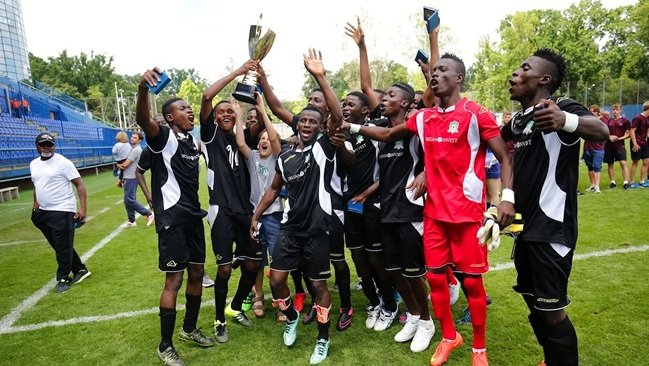
Students at the college sometimes compete in international youth tournaments, including in Europe, where they have done very well against teams from other countries. This helps students get noticed by scouts and increases their chances of becoming professional football players.
Academic Requirements and Duration
For the 2025/2026 session, Abuja Football College sets clear academic conditions for admission. Applicants must have a minimum of five credits in senior secondary examinations such as WASSCE or NECO, including English Language, Mathematics, Biology, Physics and Chemistry. Academic standards are an important part of how students are selected, not just football ability.
The college runs a formal academic programme alongside football training. This programme lasts for as long as five years, considering what is stated in some published applications for the 2025/26 session. At the end of the programme, students receive academic and professional certificates.
Abuja Football College Academy Alumni
Although Abuja Football College does not release a full list of its graduates, several former students have become professional football players. Some have even moved abroad to play for clubs in other countries.
Some known graduates include:
Umar Sadiq
Umar Sadiq, also known as Sadiq Umar, is one of the most successful players to come through Abuja Football College. He developed at FCA before moving into European youth football, first with Spezia and later with AS Roma. While under contract with Roma, he gained senior experience through loan spells, playing regular professional football. He later moved to Spain, where he played for Almería and then Real Sociedad.
Nura Abdullahi and early retirement
Nura Abdullahi, sometimes referred to as Abdullahi Nura, also progressed from Abuja Football College to Spezia and then AS Roma. He reached senior professional football in Europe. However, his career was cut short when he was forced to retire on medical grounds at a young age.
Dele Alampasu
Dele Alampasu came through Abuja Football College and gained fame at the 2013 FIFA Under-17 World Cup. Nigeria won the tournament, and Alampasu won the Golden Glove award as the best goalkeeper. After this success, he signed for clubs in Europe, playing in Portugal, Latvia, Malta and later France.
David Samuel Nwolokor
David Samuel Nwolokor trained at Abuja Football College before moving to Croatia to join HNK Rijeka. He spent much of his career on loan in Bosnia, Slovakia and Slovenia.
Theophilus Awua
Theophilus Awua is another Abuja Football College product. He moved to Italy and was linked with Spezia and trained with Inter at youth level, followed by several loans and transfers.
Wrap Up
Abuja Football College contributes to Nigerian football by preparing students academically and athletically. Graduates go on to play for Nigerian clubs, youth national teams, and sometimes international teams, helping build the country’s pool of football talent.