This Article Was Last Updated: August 29, 2026 by Victor Odia
The FIFA World Cup Trophy represents the highest prize in international football. Every four years, national teams compete to lift it, with legends such as Pelé, Diego Maradona, Zinedine Zidane and Lionel Messi shaping its legacy.
Fans follow the trophy because it carries history, prestige and controversy. Its story includes thefts, recovery cases, design changes and strict ownership rules. FIFA never allows any nation to keep the original.
Before 1974, FIFA awarded the Jules Rimet Trophy. After Brazil won it permanently in 1970, FIFA commissioned a new design.
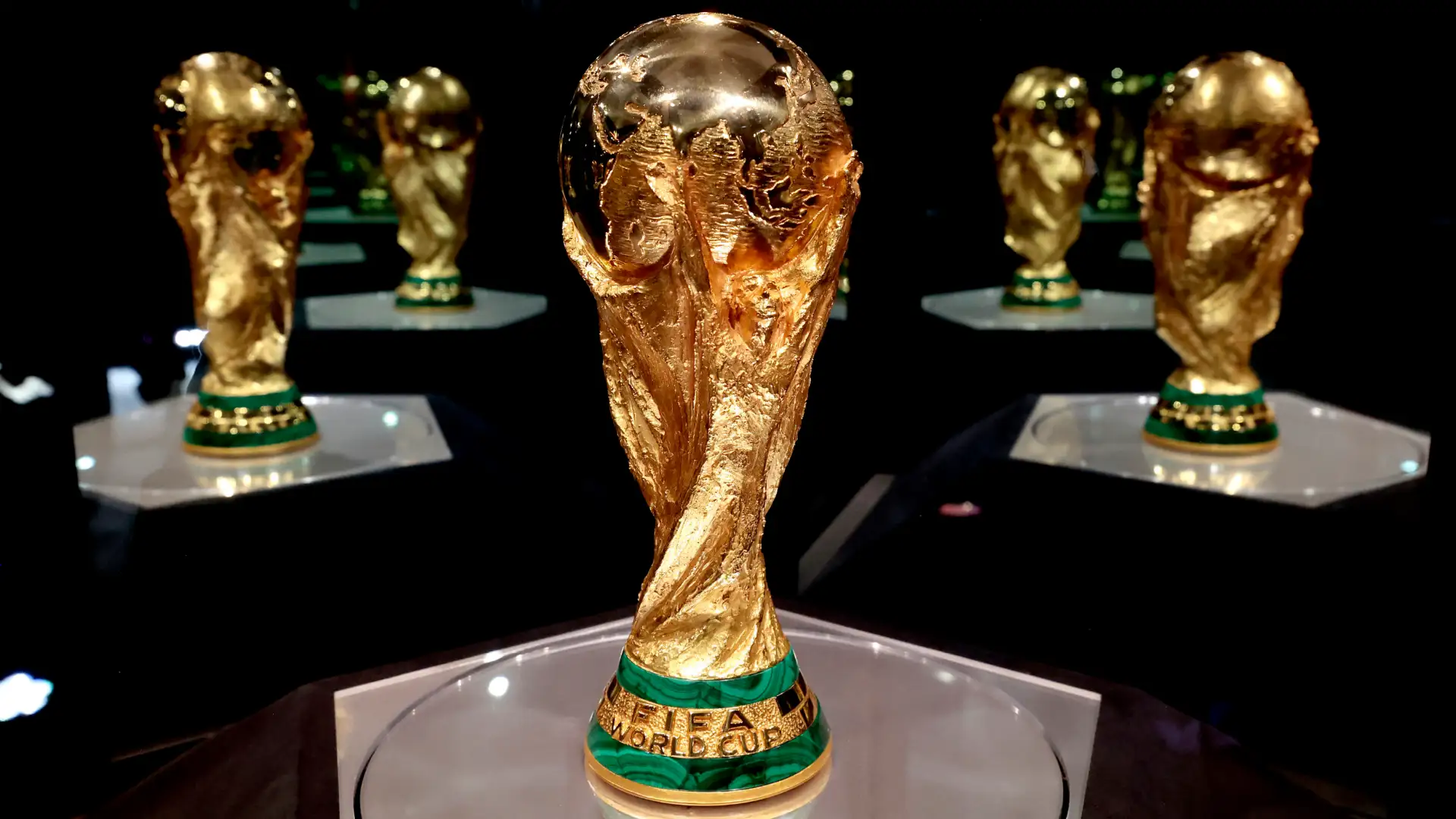
The modern trophy, created by Silvio Gazzaniga, first appeared at the 1974 FIFA World Cup and remains in use today.
History of the FIFA World Cup Trophy
The Jules Rimet Trophy: Origins and Disappearance
FIFA created the original trophy for the first World Cup in 1930. It originally carried the name “Victory” before later becoming the Jules Rimet Trophy.
Abel Lafleur designed it in gold-plated sterling silver with a lapis lazuli base. The design showed Nike, the Greek goddess of victory, holding a cup above a geometric base.
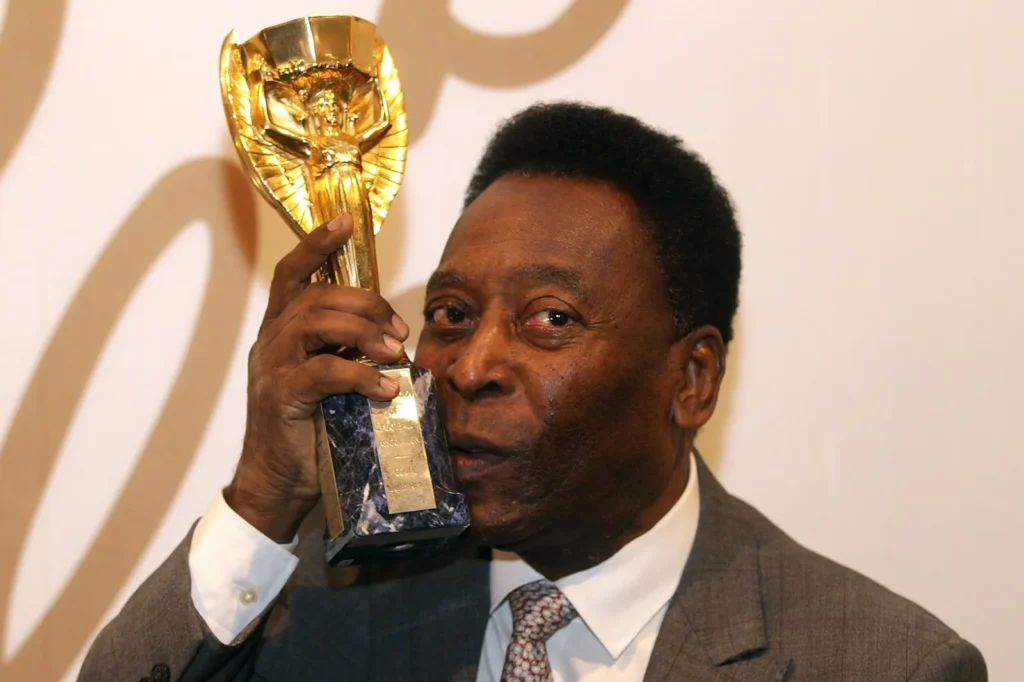
Brazil secured permanent ownership after winning three titles in 1958, 1962 and 1970. After that, FIFA replaced it with a new trophy.
The trophy suffered two major thefts. It disappeared in 1983 in Brazil and never reappeared, with most experts believing thieves melted it down.
The New FIFA World Cup Trophy Design
Silvio Gazzaniga won FIFA’s design competition against 53 entries. His concept replaced mythology with human figures lifting the Earth.
The design symbolises unity, strength and global competition. It reflects football’s worldwide reach rather than a single national identity.
FIFA keeps the original trophy. Winners lift it during celebrations but receive a gold-plated replica for permanent display.
Key specifications define the trophy:
• Height: 36.8 cm
• Weight: 6.175 kg
• Material: 18-carat gold
• Base: Green malachite rings
• Introduced: 1974
Is the World Cup Trophy Made of Gold?
The trophy uses 18-carat gold, which contains 75% pure gold mixed with strengthening metals. It is not solid gold. Engineers designed a hollow interior to keep it light enough to lift.
A fully solid version would weigh more than 70 kg, making celebrations impossible. The malachite base adds colour contrast and structural balance.
The trophy contains around 5 kg of gold. Experts estimate its insurance value at over 20 million US dollars due to rarity and symbolism.
FIFA World Cup Trophy Value in 2026
The trophy’s value depends on material worth and historical significance. Rising gold prices have increased its base value, but football history drives its real worth.
Estimated value breakdown:
• Gold value: about 713,000 US dollars
• Material value: 700,000–750,000 US dollars
• Historical value: 15–20 million US dollars
Gold prices have risen sharply since 2022, increasing intrinsic value. However, FIFA will never sell the trophy, so its market value remains theoretical.
Why the Trophy Is Priceless
The trophy holds a unique status because only one original exists. FIFA retains full ownership and stores it at the FIFA World Football Museum in Zurich.
Winning captains lift it during the final before FIFA collects it again. Every champion since 1974 has followed this rule, including Brazil, Germany, Italy and Argentina.
World Cup Trophy Ownership and Engraving
FIFA never transfers ownership of the original trophy. Instead, it issues a gold-plated replica to each winning nation.
FIFA engraves the winners on the base, listing the country and year. Since 1994, engravings have sat on a removable plate to preserve the design.
The current plate holds inscriptions through the 2038 tournament. FIFA updates it after each World Cup cycle.
FIFA controls access strictly. Only officials, heads of state, and World Cup winners can touch the original without protection.
FIFA World Cup Trophy Facts
The trophy has a hollow structure to support lifting during celebrations. It uses green malachite to represent the pitch and contrast with gold.
The Jules Rimet Trophy remains one of sport’s most famous lost artefacts after its 1983 disappearance. Security around the modern trophy remains extremely strict, with controlled transport and limited access.
Silvio Gazzaniga’s design continues to define football’s global image. Every World Cup winner since 1974 has lifted the same original trophy during the ceremony.