This Article Was Last Updated: August 29, 2026 by Victor Odia
The FIFA World Cup winners list includes every champion from the first tournament in 1930 to the latest edition in 2026. Brazil remains the most successful nation with five titles. Germany and Italy have won four each, Argentina has three, while Spain, France and Uruguay have won two each. England has won the tournament once.
Held every four years by the Fédération Internationale de Football Association (FIFA), the FIFA World Cup is the biggest competition in men’s international football. Since the inaugural tournament in Uruguay in 1930, only eight countries have lifted the famous trophy despite more than 80 nations qualifying for the finals.
This guide contains the complete FIFA World Cup winners list from 1930 to 2026, including every final, runners-up, title records, historic milestones, memorable finals and frequently asked questions.
FIFA World Cup Winners List (1930–2026)
The table below shows every FIFA World Cup champion, runner-up and final score since the competition began in 1930.
| Year | Host | Winner | Runner-up | Final Result |
| 1930 | Uruguay | Uruguay | Argentina | 4–2 |
| 1934 | Italy | Italy | Czechoslovakia | 2–1 (a.e.t.) |
| 1938 | France | Italy | Hungary | 4–2 |
| 1950 | Brazil | Uruguay | Brazil | 2–1* |
| 1954 | Switzerland | West Germany | Hungary | 3–2 |
| 1958 | Sweden | Brazil | Sweden | 5–2 |
| 1962 | Chile | Brazil | Czechoslovakia | 3–1 |
| 1966 | England | England | West Germany | 4–2 (a.e.t.) |
| 1970 | Mexico | Brazil | Italy | 4–1 |
| 1974 | West Germany | West Germany | Netherlands | 2–1 |
| 1978 | Argentina | Argentina | Netherlands | 3–1 (a.e.t.) |
| 1982 | Spain | Italy | West Germany | 3–1 |
| 1986 | Mexico | Argentina | West Germany | 3–2 |
| 1990 | Italy | West Germany | Argentina | 1–0 |
| 1994 | United States | Brazil | Italy | 0–0 (3–2 pens.) |
| 1998 | France | France | Brazil | 3–0 |
| 2002 | South Korea / Japan | Brazil | Germany | 2–0 |
| 2006 | Germany | Italy | France | 1–1 (5–3 pens.) |
| 2010 | South Africa | Spain | Netherlands | 1–0 (a.e.t.) |
| 2014 | Brazil | Germany | Argentina | 1–0 (a.e.t.) |
| 2018 | Russia | France | Croatia | 4–2 |
| 2022 | Qatar | Argentina | France | 3–3 (4–2 pens.) |
| 2026 | Canada / Mexico / United States | Spain | Argentina | 1–0 (a.e.t.) |
*The 1950 FIFA World Cup did not have a traditional final. Uruguay’s 2–1 win over Brazil in the final round group decided the championship and is recognised by FIFA as the tournament’s decisive match.
FIFA World Cup Winners by Country
Only eight countries have won the FIFA World Cup since the competition started in 1930.
| Country | Titles | Years Won |
| Brazil | 5 | 1958, 1962, 1970, 1994, 2002 |
| Germany (including West Germany) | 4 | 1954, 1974, 1990, 2014 |
| Italy | 4 | 1934, 1938, 1982, 2006 |
| Argentina | 3 | 1978, 1986, 2022 |
| Spain | 2 | 2010, 2026 |
| France | 2 | 1998, 2018 |
| Uruguay | 2 | 1930, 1950 |
| England | 1 | 1966 |
Brazil remains the most successful nation in FIFA World Cup history with five titles. Germany and Italy have each won four championships, while Argentina has lifted the trophy three times. Spain joined France and Uruguay on two titles after winning the 2026 FIFA World Cup.
FIFA World Cup Winners Timeline
1930: Uruguay won the first FIFA World Cup
Uruguay hosted and won the inaugural FIFA World Cup by defeating Argentina 4–2 in Montevideo. The victory made Uruguay the first world champions and established the tournament as football’s biggest international competition.
1934: Italy became the first European champions
Italy hosted the second World Cup and defeated Czechoslovakia 2–1 after extra time in Rome. It became the first European nation to win the FIFA World Cup.
1938: Italy retained the trophy
Italy defended the title by beating Hungary 4–2 in France. It became the first country to win consecutive FIFA World Cups.
1950: Uruguay shocked Brazil
The World Cup returned after World War II. Uruguay defeated hosts Brazil 2–1 at the Maracanã in Rio de Janeiro in the decisive final-round match, one of the greatest upsets in football history.
1954: West Germany completed the Miracle of Bern
West Germany recovered from an early deficit to defeat Hungary 3–2 in Bern. Hungary had entered the final unbeaten and were favourites to win the tournament.
1958: Brazil won their first title
Brazil defeated Sweden 5–2 in Stockholm to claim their first FIFA World Cup. A 17-year-old Pelé scored twice in the final as Brazil began one of the greatest eras in football history.
1962: Brazil defended the championship
Brazil beat Czechoslovakia 3–1 in Santiago to become the second nation after Italy to retain the FIFA World Cup.
1966: England won at Wembley
England defeated West Germany 4–2 after extra time to win their only FIFA World Cup. Geoff Hurst scored the only hat-trick ever recorded in a World Cup final.
1970: Brazil won a third title
Brazil defeated Italy 4–1 in Mexico City to become the first nation to win the World Cup three times and permanently retain the Jules Rimet Trophy.
1974: West Germany triumphed at home
West Germany defeated the Netherlands 2–1 in Munich to secure their second FIFA World Cup title despite conceding an early penalty.
1978: Argentina celebrated their first triumph
Hosts Argentina beat the Netherlands 3–1 after extra time in Buenos Aires to lift their first FIFA World Cup trophy.
1982: Italy returned to the summit
Italy defeated West Germany 3–1 in Madrid to win their third FIFA World Cup title after a strong knockout-stage campaign.
1986: Argentina inspired by Diego Maradona
Argentina defeated West Germany 3–2 in Mexico City to secure their second title. Diego Maradona captained one of the most celebrated teams in World Cup history.
1990: West Germany gained revenge
West Germany defeated Argentina 1–0 in Rome to win their third World Cup before German reunification.
1994: Brazil won on penalties
Brazil defeated Italy after the first penalty shoot-out in FIFA World Cup final history following a goalless draw in Pasadena.
1998: France celebrated on home soil
France defeated Brazil 3–0 in Paris to win their first FIFA World Cup. Zinedine Zidane scored twice in the final.
2002: Brazil became five-time champions
Brazil defeated Germany 2–0 in Yokohama to win a record fifth FIFA World Cup. Ronaldo scored both goals in the final.
2006: Italy lifted a fourth title
Italy defeated France on penalties in Berlin after a 1–1 draw. The match is remembered for Zinedine Zidane’s red card in extra time.
2010: Spain reached the top
Spain defeated the Netherlands 1–0 after extra time in Johannesburg through Andrés Iniesta’s winning goal to claim their first FIFA World Cup.
2014: Germany became world champions again
Germany defeated Argentina 1–0 after extra time in Rio de Janeiro. Mario Götze scored the winning goal late in extra time.
2018: France won a second title
France defeated Croatia 4–2 in Moscow to become world champions for the second time.
2022: Argentina ended a 36-year wait

Argentina defeated France on penalties after a dramatic 3–3 draw in Lusail. Lionel Messi captained Argentina to their third FIFA World Cup title.
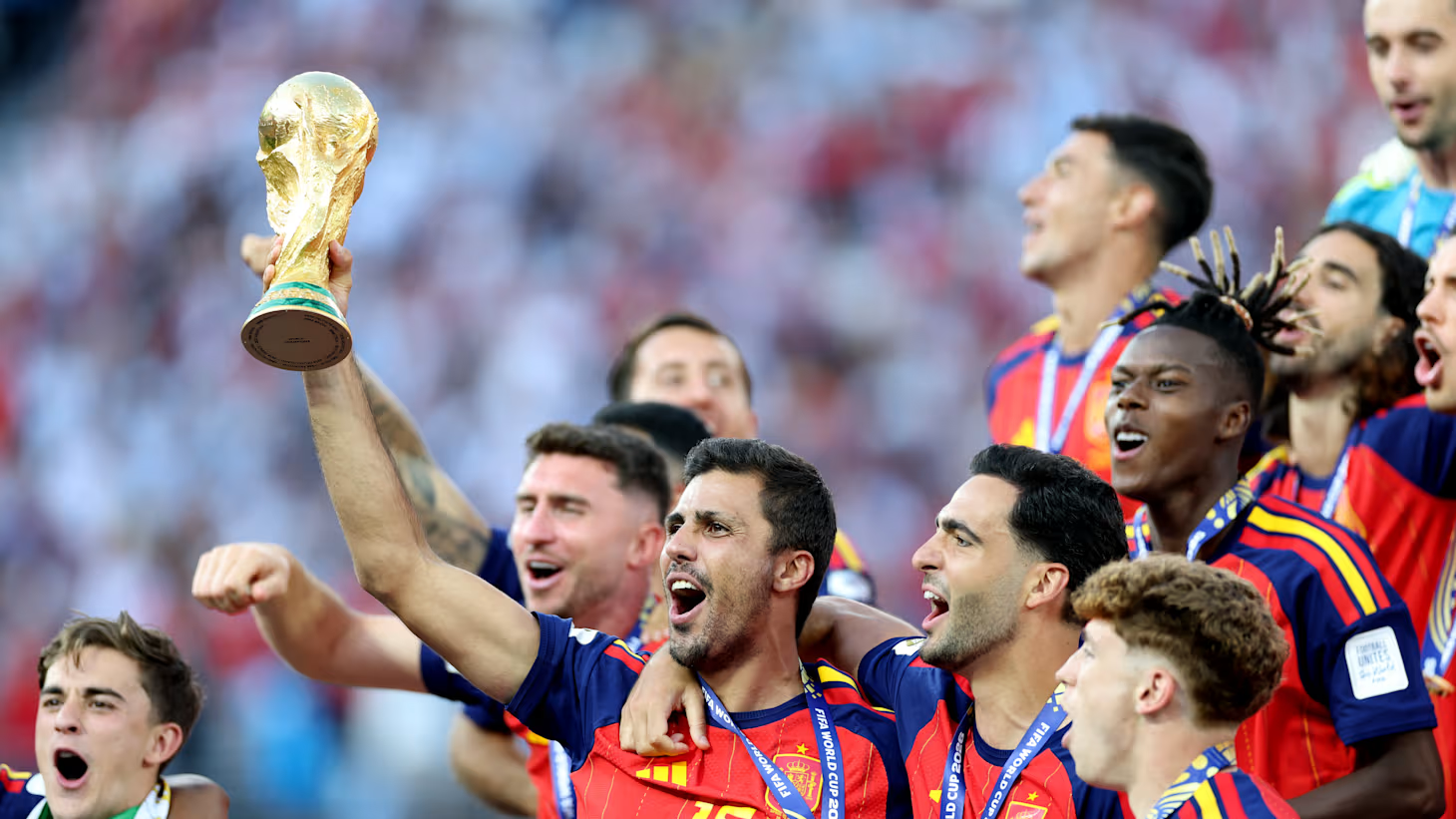
2026: Spain won their second FIFA World Cup
Spain defeated Argentina 1–0 after extra time at MetLife Stadium in East Rutherford, New Jersey. The victory gave Spain a second FIFA World Cup title, making them the eighth nation to win multiple World Cup championships.
FIFA World Cup Final Records and Statistics
The FIFA World Cup has produced 22 championship matches since 1930, with only eight nations lifting the trophy. Brazil remains the most successful team, while Germany holds the record for the most final appearances.
Most FIFA World Cup Titles
| Rank | Country | Titles | Winning Years |
| 1 | Brazil | 5 | 1958, 1962, 1970, 1994, 2002 |
| 2 | Germany (including West Germany) | 4 | 1954, 1974, 1990, 2014 |
| 2 | Italy | 4 | 1934, 1938, 1982, 2006 |
| 4 | Argentina | 3 | 1978, 1986, 2022 |
| 5 | France | 2 | 1998, 2018 |
| 5 | Spain | 2 | 2010, 2026 |
| 5 | Uruguay | 2 | 1930, 1950 |
| 8 | England | 1 | 1966 |
Brazil has won more FIFA World Cups than any other country. Germany and Italy share second place with four titles each, while Argentina follows with three championships.
Countries With the Most FIFA World Cup Final Appearances
Reaching the World Cup final is one of the hardest achievements in international football. Germany has reached the final more often than any other nation.
| Rank | Country | Finals | Titles | Runners-up |
| 1 | Germany | 8 | 4 | 4 |
| 2 | Brazil | 7 | 5 | 2 |
| 2 | Argentina | 7 | 3 | 4 |
| 4 | Italy | 6 | 4 | 2 |
| 5 | France | 4 | 2 | 2 |
| 6 | Netherlands | 3 | 0 | 3 |
| 7 | Uruguay | 2 | 2 | 0 |
| 7 | Spain | 2 | 2 | 0 |
| 9 | Czechoslovakia | 2 | 0 | 2 |
| 9 | Hungary | 2 | 0 | 2 |
| 11 | England | 1 | 1 | 0 |
| 11 | Sweden | 1 | 0 | 1 |
| 11 | Croatia | 1 | 0 | 1 |
Germany’s eight final appearances are the most in FIFA World Cup history. Brazil and Argentina follow with seven each.
FIFA World Cup Winners by Confederation
Only two continental confederations have produced FIFA World Cup champions.
| Confederation | Final Appearances | Titles | Runner-up Finishes |
| UEFA (Europe) | 30 | 13 | 17 |
| CONMEBOL (South America) | 16 | 10 | 6 |
European nations have won 13 FIFA World Cup titles, while South American teams have won 10. No country from Africa, Asia, North America or Oceania has won the men’s FIFA World Cup.
Biggest Winning Margins in FIFA World Cup Finals
The largest winning margin in a FIFA World Cup final is three goals. It has happened four times.
| Year | Winner | Runner-up | Score |
| 1958 | Brazil | Sweden | 5–2 |
| 1970 | Brazil | Italy | 4–1 |
| 1998 | France | Brazil | 3–0 |
| 2018 | France | Croatia | 4–2 |
Brazil’s 5–2 victory over Sweden in 1958 remains the highest-scoring World Cup final and one of the most dominant performances in the competition’s history.
FIFA World Cup Finals Decided After Extra Time
Several World Cup finals have required extra time before a winner emerged.
| Year | Winner | Runner-up | Result |
| 1934 | Italy | Czechoslovakia | 2–1 |
| 1966 | England | West Germany | 4–2 |
| 1978 | Argentina | Netherlands | 3–1 |
| 2010 | Spain | Netherlands | 1–0 |
| 2014 | Germany | Argentina | 1–0 |
| 2026 | Spain | Argentina | 1–0 |
The 2026 FIFA World Cup final became the sixth final settled during extra time.
FIFA World Cup Finals Decided on Penalties
Only three FIFA World Cup finals have been decided by penalty shoot-outs.
| Year | Winner | Runner-up | Shoot-out Score |
| 1994 | Brazil | Italy | 3–2 |
| 2006 | Italy | France | 5–3 |
| 2022 | Argentina | France | 4–2 |
Brazil won the first penalty shoot-out in a World Cup final in 1994. Argentina’s victory over France in 2022 produced one of the most dramatic finals in tournament history.
Countries That Won Every FIFA World Cup Final They Reached
Some countries have maintained a perfect record in FIFA World Cup finals.
| Country | Finals | Titles |
| Uruguay | 2 | 2 |
| Spain | 2 | 2 |
| England | 1 | 1 |
Uruguay and Spain have each won both World Cup finals they have played. England also has a perfect record after winning its only final in 1966.
Countries That Lost the Most FIFA World Cup Finals
Several countries have reached multiple finals without always lifting the trophy.
| Country | Runner-up Finishes |
| Germany | 4 |
| Argentina | 4 |
| Netherlands | 3 |
| Brazil | 2 |
| Italy | 2 |
| France | 2 |
| Czechoslovakia | 2 |
| Hungary | 2 |
Germany and Argentina have finished as runners-up four times each, more than any other nation.
Most Memorable FIFA World Cup Finals
Some World Cup finals changed football history because of dramatic finishes, legendary performances and unforgettable moments.
1950 – Uruguay 2–1 Brazil
More than 170,000 spectators packed the Maracanã Stadium expecting Brazil to become world champions. Uruguay came from behind to win 2–1 through goals from Juan Schiaffino and Alcides Ghiggia. The result became known as the Maracanazo, one of the greatest upsets in football history.
1966 – England 4–2 West Germany
England won its only FIFA World Cup after defeating West Germany in extra time at Wembley Stadium. Geoff Hurst scored the only hat-trick in a World Cup final, while his controversial second goal remains one of football’s most debated moments.
1970 – Brazil 4–1 Italy
Brazil produced one of the finest performances ever seen in a World Cup final. Pelé scored the opening goal before Carlos Alberto finished a famous team move that remains one of the greatest goals in FIFA World Cup history.
1986 – Argentina 3–2 West Germany
Argentina threw away a two-goal lead before Jorge Burruchaga scored the winner late in the match. Diego Maradona captained Argentina to their second FIFA World Cup title after one of the greatest individual tournaments ever played.
1998 – France 3–0 Brazil
France won its first FIFA World Cup on home soil. Zinedine Zidane scored twice with first-half headers before Emmanuel Petit sealed victory in stoppage time.
2006 – Italy 1–1 France (Italy won 5–3 on penalties)
The final is remembered for Zinedine Zidane’s penalty, Marco Materazzi’s equaliser and Zidane’s famous red card after headbutting Materazzi during extra time. Italy converted all five penalties to win their fourth FIFA World Cup title.
2022 – Argentina 3–3 France (Argentina won 4–2 on penalties)
Widely regarded as one of the greatest World Cup finals ever, Argentina led 2–0 before Kylian Mbappé inspired France’s comeback with a hat-trick. Lionel Messi scored twice as Argentina eventually won the penalty shoot-out to secure a third world title.
2026 – Spain 1–0 Argentina (after extra time)
Spain defeated defending champions Argentina 1–0 after extra time at MetLife Stadium in East Rutherford, New Jersey. The victory secured Spain’s second FIFA World Cup title and made them the eighth nation to win multiple World Cup championships.
First-Time FIFA World Cup Winners
Winning the FIFA World Cup for the first time is one of the biggest achievements in football. Since 1930, only eight countries have lifted the trophy, and every new champion has marked a major moment in the tournament’s history.
Uruguay (1930)
Uruguay became the first FIFA World Cup champions by defeating Argentina 4–2 in Montevideo. As hosts, they completed an unbeaten campaign and set the standard for future tournaments.
Italy (1934)
Italy became the first European nation to win the FIFA World Cup after beating Czechoslovakia 2–1 after extra time in Rome.
West Germany (1954)
West Germany won their first World Cup by coming from behind to defeat the heavily favoured Hungary 3–2 in Bern. The victory became known as the “Miracle of Bern.”
Brazil (1958)
Brazil claimed their first FIFA World Cup title after beating Sweden 5–2 in Stockholm. Pelé announced himself on the world stage by scoring twice in the final at just 17 years of age.
England (1966)
England won the World Cup for the first and only time by defeating West Germany 4–2 after extra time at Wembley Stadium.
Argentina (1978)
Argentina lifted the trophy for the first time after defeating the Netherlands 3–1 after extra time in Buenos Aires.
France (1998)
France won their first FIFA World Cup on home soil by beating Brazil 3–0. Zinedine Zidane scored twice in the final.
Spain (2010)
Spain became the eighth nation to win the FIFA World Cup after Andrés Iniesta scored the extra-time winner against the Netherlands in Johannesburg.
Nations That Successfully Defended the FIFA World Cup
Only two countries have successfully defended their FIFA World Cup title.
Italy (1934 and 1938)
Italy became the first nation to retain the FIFA World Cup by winning consecutive tournaments in 1934 and 1938 under coach Vittorio Pozzo.
Brazil (1958 and 1962)
Brazil successfully defended their title by winning the 1958 and 1962 tournaments. They became the second nation to win back-to-back World Cups.
No country has retained the FIFA World Cup since Brazil won in 1962.
Countries That Have Never Won a FIFA World Cup Final
Several nations have reached the FIFA World Cup final but have never lifted the trophy.
| Country | Final Appearances | Runner-up Finishes |
| Netherlands | 3 | 3 |
| Czechoslovakia | 2 | 2 |
| Hungary | 2 | 2 |
| Sweden | 1 | 1 |
| Croatia | 1 | 1 |
The Netherlands holds the record for the most FIFA World Cup final appearances without winning the tournament.
FIFA World Cup Finals by Host Continent
The FIFA World Cup has been played across five continents, but Europe and South America have hosted most finals.
| Continent | World Cup Finals Hosted |
| Europe | 11 |
| South America | 5 |
| North America | 4 |
| Asia | 2 |
| Africa | 1 |
The 2026 FIFA World Cup final at MetLife Stadium became the fourth final hosted in North America.
Interesting FIFA World Cup Winners Facts
- Brazil is the only country to qualify for every FIFA World Cup tournament.
- Germany has played in more FIFA World Cup finals than any other nation, reaching eight.
- Brazil has won the most FIFA World Cup titles with five.
- Spain has won both FIFA World Cup finals it has played.
- Uruguay has never lost a FIFA World Cup final.
- England has appeared in only one FIFA World Cup final and won it.
- The Netherlands has lost all three FIFA World Cup finals it has reached.
- Brazil won the first FIFA World Cup final decided by penalties in 1994.
- Argentina and France played in the highest-scoring FIFA World Cup final of the modern era, drawing 3–3 before penalties in 2022.
- Geoff Hurst remains the only player to score a hat-trick in a FIFA World Cup final.
- Kylian Mbappé holds the record for the most goals scored in FIFA World Cup finals with four.
- Only Europe (UEFA) and South America (CONMEBOL) have produced FIFA World Cup champions.