This Article Was Last Updated: August 29, 2026 by Victor Odia
Nigeria women’s national football team have shaped African women’s football at the FIFA Women’s World Cup since 1991. They remain Africa’s most consistent team in the competition and one of the longest-serving sides outside Europe and North America.
Nigeria have played in nine World Cups from 1991 to 2023. They built a record defined by steady qualification and mixed results at the finals. Most tournaments ended at the group stage. However, two editions stand out: 1999 and 2023.
The 1999 run took Nigeria to the quarter-finals. The 2023 campaign took them to the Round of 16. These remain their strongest performances on the world stage.
Super Falcons World Cup History: Every Appearance, Result and Key Moment
Nigeria’s Super Falcons World Cup history shows long-term consistency in qualification but limited progress beyond the group stage. A full breakdown of the players who featured across different tournaments is available in the Super Falcons squad list, which details positions, ages, and selection patterns across generations.
They have qualified for every edition since 1991. That record confirms strong dominance in African qualification cycles. At the same time, global finals have proved more difficult.
Across nine tournaments, Nigeria faced repeated group-stage exits. Still, their level improved over time. Early heavy defeats gave way to closer matches in recent editions. This shift reflects better structure and preparation.
Nigeria have never reached a semi-final. Their best result remains the 1999 quarter-final.
Super Falcons World Cup Participation Record
Nigeria’s Super Falcons World Cup appearances cover nine tournaments from 1991 to 2023. They have never missed a World Cup they qualified for.
Their record shows a clear pattern. Nigeria perform strongly in Africa but struggle to maintain consistency against top global sides in tournament play.
Most campaigns ended in the group stage. However, performance levels changed across decades. Early tournaments featured heavy losses. Later tournaments became more competitive, especially after 2015.
The FIFA Women’s World Cup structure places teams into groups before knockout rounds. Nigeria have only reached the knockout phase twice, which highlights the challenge of advancing beyond the group stage.
Tournament-by-Tournament Super Falcons World Cup History
1991–1999: Early Growth and First Breakthrough
Nigeria entered the 1991 World Cup with limited international experience. They lost all group matches and exited early. The team gained exposure but not results.
In 1995, Nigeria improved slightly. They showed better organisation, but still failed to score enough points to progress.
The 1999 tournament marked a major shift in Nigeria women’s World Cup history. Nigeria reached the quarter-finals for the first time. They moved past the group stage and recorded their best-ever finish. This remains their peak performance.
2003–2011: Consistent Qualification, Limited Progress
Nigeria qualified for every edition in this period. However, results did not improve.
In 2003, 2007, and 2011, Nigeria exited at the group stage. They faced stronger tactical teams and struggled to control matches.
By 2011, performances became tighter. Nigeria conceded fewer goals, but they still failed to win matches or progress. This phase showed stability in qualification but no breakthrough in results.
2015–2023: Modern Era and Competitive Return
The modern era brought clearer progress in Nigeria women World Cup results.
In 2015, Nigeria lost all group matches. They faced top-ranked opponents and struggled to create chances.
In 2019, Nigeria recorded a key improvement. They beat South Korea 2–0 and stayed competitive in other matches. They still exited in the group stage, but performance levels improved.
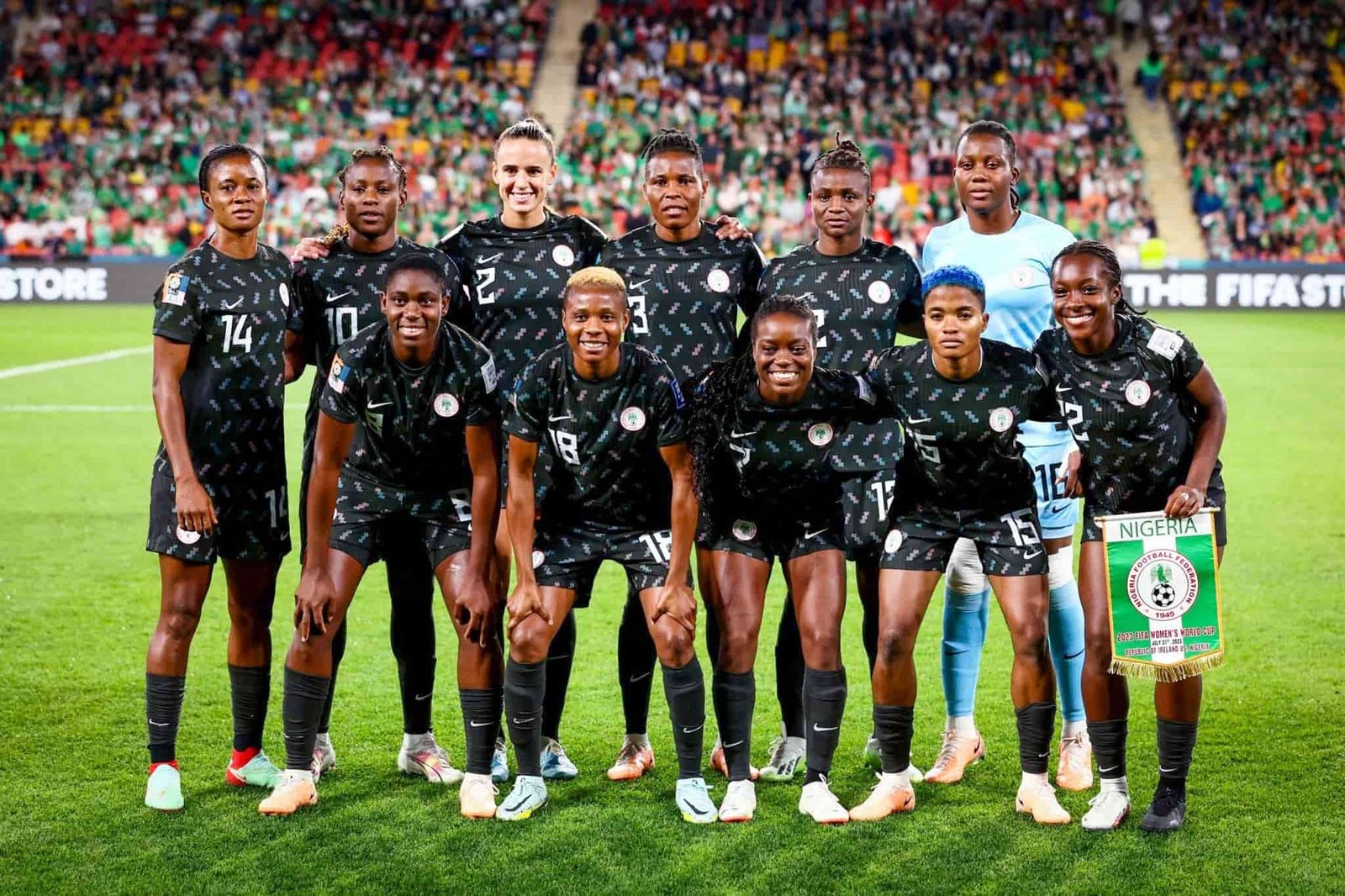
The 2023 tournament delivered Nigeria’s strongest modern run. They drew with Canada, beat Australia 3–2, and reached the Round of 16. England eliminated them on penalties after a goalless match. Nigeria left the tournament with their best modern performance.
Knockout Stage Record in Super Falcons World Cup History
Nigeria’s women World Cup knockout stage record remains limited but important.
They have reached the knockout stage twice:
- 1999: Quarter-finals
- 2023: Round of 16
These two campaigns define Nigeria’s global peak. Between them, Nigeria spent many tournaments stuck in the group stage.
The 2023 performance showed a clear change. Nigeria matched a top European side and stayed competitive for 120 minutes. This signalled progress in tactical discipline and game management. Leadership played a major role in this improvement, and here is the list of Super Falcons captains who guided Nigeria through key World Cup eras and pressure moments.
Super Falcons World Cup Match-Level Record (1991–2023)
This section lists all official results in Super Falcons World Cup history up to the 2023 FIFA Women’s World Cup.
1991: Debut tournament struggles
Nigeria entered their first World Cup with limited experience. They lost all group matches and exited early.
- vs Germany – Lost
- vs Italy – Lost
- vs Chinese Taipei – Lost
Nigeria finished bottom of Group B.
1995: Better structure, same outcome
Nigeria improved in organisation. However, they still failed to take points.
- vs Canada – Lost
- vs England – Lost
- vs Norway – Lost
Nigeria exited at the group stage.
1999: Historic quarter-final run
Nigeria delivered their best performance in women’s World Cup history.
Group stage:
- vs North Korea – Lost
- vs USA – Lost
- vs Denmark – Won
Nigeria progressed as one of the best third-placed teams.
Quarter-final:
- vs Brazil – Lost (3–4 after extra time)
Nigeria reached their deepest World Cup stage.
2003: Group-stage elimination
Nigeria struggled against top opposition and failed to pick up points.
- vs North Korea – Lost
- vs USA – Lost
- vs Sweden – Lost
Nigeria exited bottom of the group.
2007: Competitive but winless
Nigeria stayed in matches for longer periods but still lacked finishing quality.
- vs Sweden – Lost
- vs USA – Lost
- vs North Korea – Lost
Nigeria exited at group stage.
2011: Narrow defeats, no points
Nigeria improved defensively but still failed to score points.
- vs France – Lost
- vs Germany – Lost
- vs Canada – Lost
Nigeria finished bottom of the group.
2015: Heavy group-stage exit
Nigeria faced strong opposition and conceded many goals. See the best Super Falcons goalkeepers of all time, who played a key role in reducing heavy defeats in recent World Cups.
- vs USA – Lost
- vs Sweden – Lost
- vs Australia – Lost
Nigeria left the tournament without a win.
2019: Return to winning form
Nigeria showed clear progress in women World Cup results.
- vs Norway – Lost
- vs South Korea – Won (2–0)
- vs France – Lost (1–0)
Nigeria finished third in the group.
2023: Strongest modern campaign
Nigeria produced their best modern World Cup performance.
- vs Canada – Draw (0–0)
- vs Australia – Won (3–2)
- vs Republic of Ireland – Draw (0–0)
Round of 16:
- vs England – Lost (0–0, 4–2 on penalties)
Nigeria reached the knockout stage for only the second time in their history.
Super Falcons World Cup Full Record Snapshot
This section summarises Super Falcons World Cup appearances in clear form.
Overall record (1991–2023)
- Appearances: 9
- Matches played: 30
- Wins: 3
- Draws: 4
- Losses: 23
Goals record
- Goals scored: 15
- Goals conceded: 56
- Goal difference: -41
Progression record
- Group stage exits: 7
- Quarter-finals: 1 (1999)
- Round of 16: 1 (2023)
Nigeria show strong qualification consistency but limited knockout progress, with clear improvement in recent tournaments.
Key Moments in Nigeria Women’s Football World Cup Performance
The Nigeria women football World Cup performance history includes several defining matches.
The 1999 quarter-final run stands as the most important milestone. It proved Nigeria could compete beyond the group stage.
In 2019, Nigeria ended a long wait for a World Cup win. The 2–0 victory over South Korea marked a turning point after years without a group-stage win.
In 2023, Nigeria produced two major moments. They beat Australia in a high-pressure group match and then pushed England to penalties in the Round of 16. These matches showed clear growth in confidence and organisation.
Super Falcons World Cup History Stats
Nigeria’s World Cup record shows clear development across three phases.
From 1991 to 2011, Nigeria struggled heavily. They lost most matches and scored few goals against stronger sides.
From 2015 onwards, results became more balanced. Nigeria started to compete better in tight matches and reduced heavy defeats.
By 2023, Nigeria showed their strongest modern balance. They defended better, created more chances, and reached the knockout stage again.
Overall, Nigeria’s record still shows more losses than wins. However, the gap between Nigeria and top teams has narrowed in recent tournaments.
Frequently Asked Questions
How many FIFA Women’s World Cups has Nigeria played in?
Nigeria have played in nine tournaments from 1991 to 2023.
What is Nigeria’s best finish in the tournament?
Nigeria reached the quarter-finals in 1999, their best result.
Has Nigeria ever reached the semi-finals?
No. Nigeria have never reached the semi-finals.
What was Nigeria’s most successful World Cup edition?
1999 remains their best tournament. The 2023 edition is their strongest modern performance.
How has Nigeria performed in recent tournaments?
Nigeria improved in 2019 and 2023. They won matches again and reached the Round of 16 in 2023.
Super Falcons World Cup Quick Scan Results
- 1991 – Group stage exit (0 wins)
- 1995 – Group stage exit (0 wins)
- 1999 – Quarter-finals (1 win, best result)
- 2003 – Group stage exit (0 wins)
- 2007 – Group stage exit (0 wins)
- 2011 – Group stage exit (0 wins)
- 2015 – Group stage exit (0 wins)
- 2019 – Group stage exit (1 win: South Korea 2–0)
- 2023 – Round of 16 (1 win, 2 draws, penalty loss to England)
Conclusion
The Super Falcons World Cup history shows steady progress with clear limits. Nigeria remain Africa’s most consistent World Cup team and a regular qualifier across three decades.
Their journey includes early struggle, a breakthrough in 1999, a long period of group-stage exits, and a modern return to knockout football in 2023.
Nigeria still aim for deeper progress. Their recent performances suggest they now compete closer to top teams than before.